AI Sales Engineers and Solution Architects that run on structured models of the products you sell, work on their own or alongside your experts, and carry the design into delivery.
VecturAI runs in two modes on the same product knowledge models: agentic, triggered by events in the systems your teams already use, and assistant, driven directly by your experts.
When a deal moves, the right work starts without anyone asking. Your experts step in only where their judgment is needed, and each answer moves the work forward.
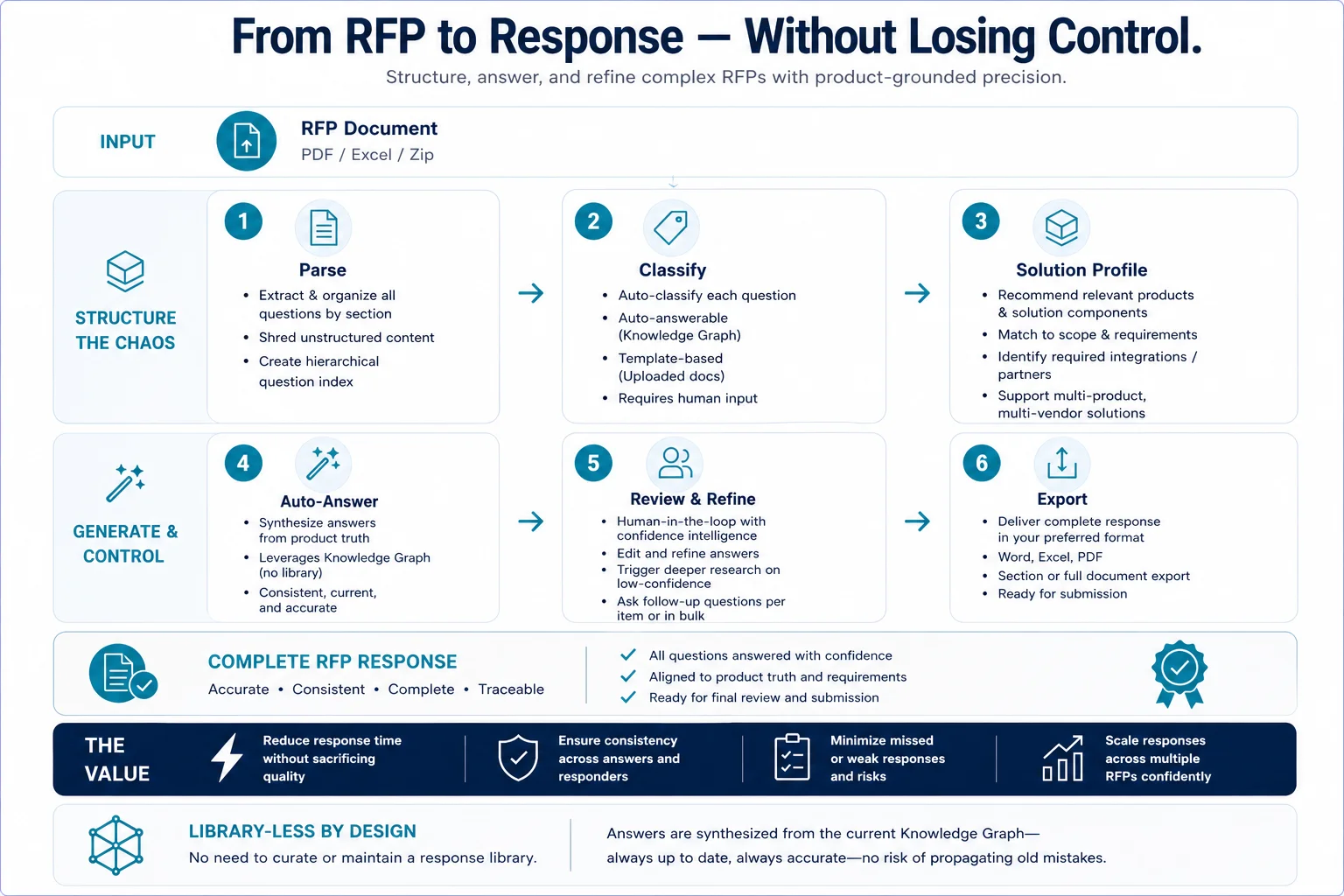
Matched to the event: a fit assessment, a solution design, an RFP response.
Each run reasons over the product knowledge models for every product in the deal.
For the work that needs a conversation. Your expert drives, and VecturAI does the heavy lifting on every turn.
Both modes draw on the same product knowledge models.
AI for software engineers is grounded in code. AI for designers is grounded in design systems. AI for sales engineering and solution architecture needs product truth: an explicit model of how each product works, what it depends on and where its limits are. VecturAI builds that model for every product in your portfolio, then uses it to direct the LLM's reasoning through every solutioning task.
Solution boundaries, use cases and adjacent products
How product components fit together
Product concepts and what they mean
Capabilities, dependencies, constraints and licensing, connected
Supporting detail from product documentation
The frontier LLM working alone reasoned well, but it assumed ServiceNow had no built-in complaint model and recommended the opposite design. Strong reasoning without product truth is fluent and wrong.
LLMs supply the reasoning. VecturAI directs it. Better models make VecturAI better.
Margin is won or lost between the signed deal and the first sprint. VecturAI keeps the design, its rationale and the product facts behind it in one place, for delivery teams and for the coding agents they work with.
The solution and technical design artifacts produced in VecturAI become available to the coding agent.
Mid-build, the coding agent calls VecturAI directly for the product facts, interfaces and constraints it needs.
Delivery joins the workspace where the deal was shaped. Decisions, constraints and open questions are already there, so no one re-runs discovery and customers don't repeat themselves.
Vendors, distributors, resellers and integrators often touch the same opportunity. Cross-organization workspaces let a vendor architect, a reseller's SE and an SI's delivery lead work from the same product truth.
Workspaces carry standing context, account-level rules and memory that compounds, distilling your instructions and inputs across threads and applying them automatically. Each workspace gets more tailored to its account over time, so no one has to repeat themselves.
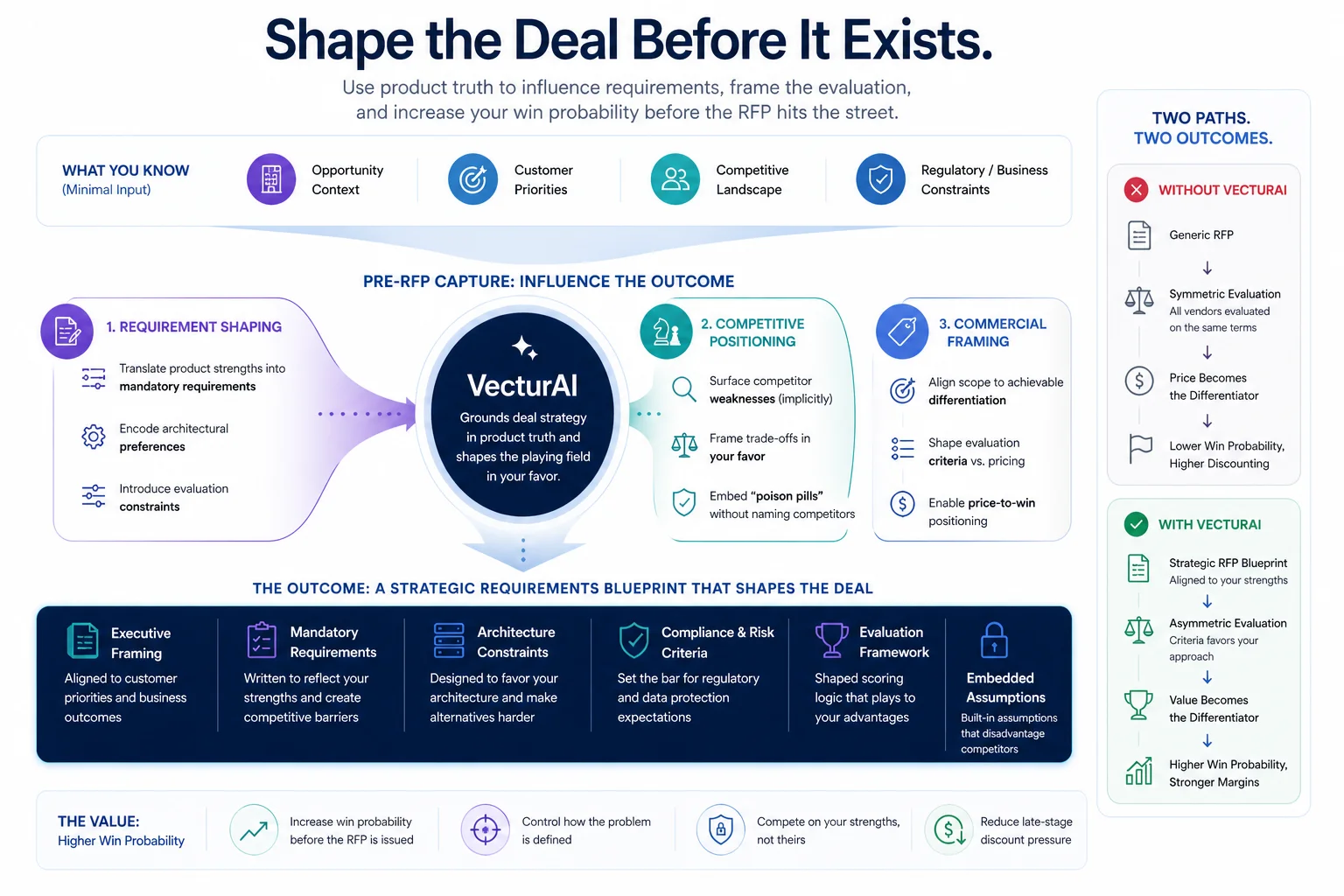
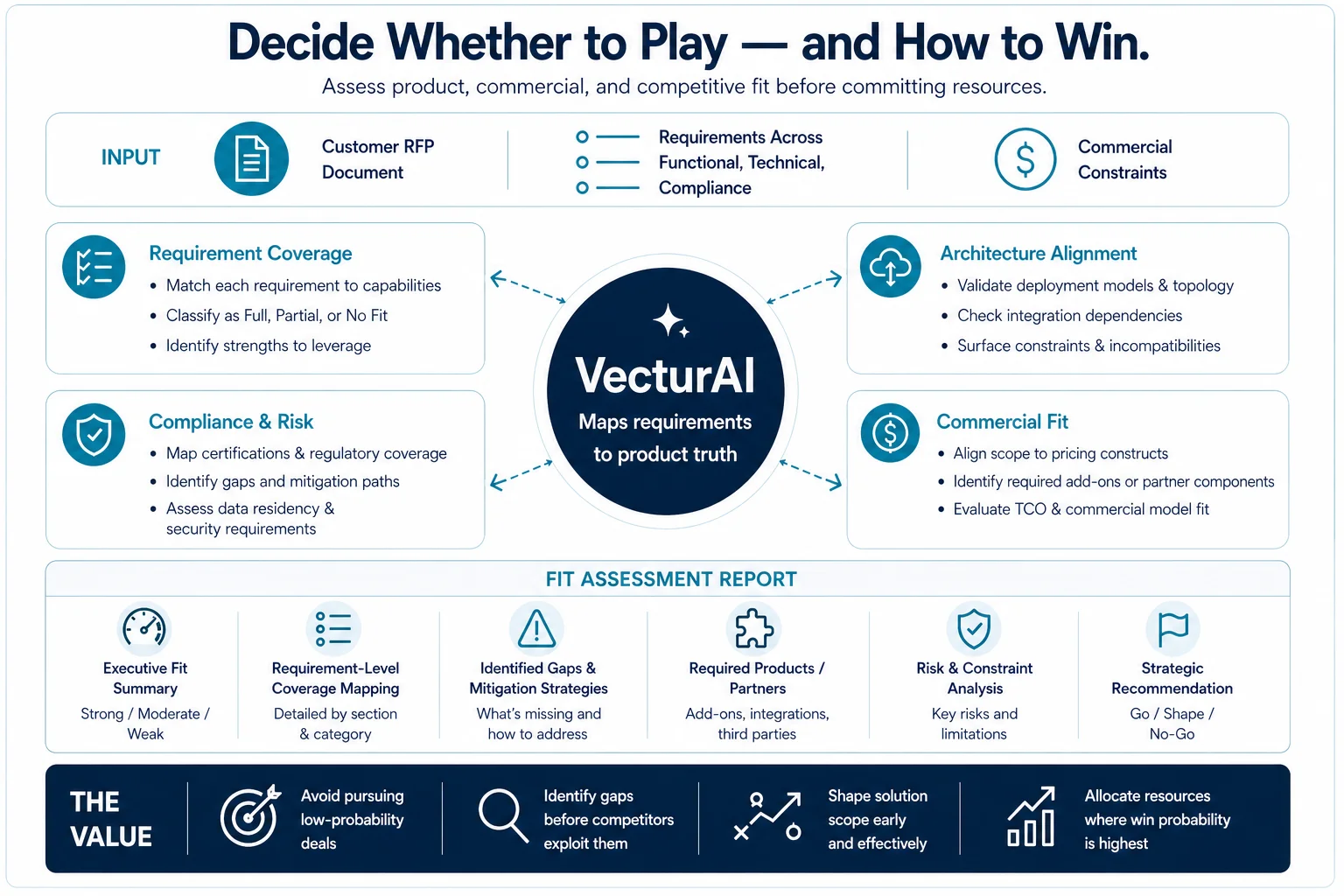
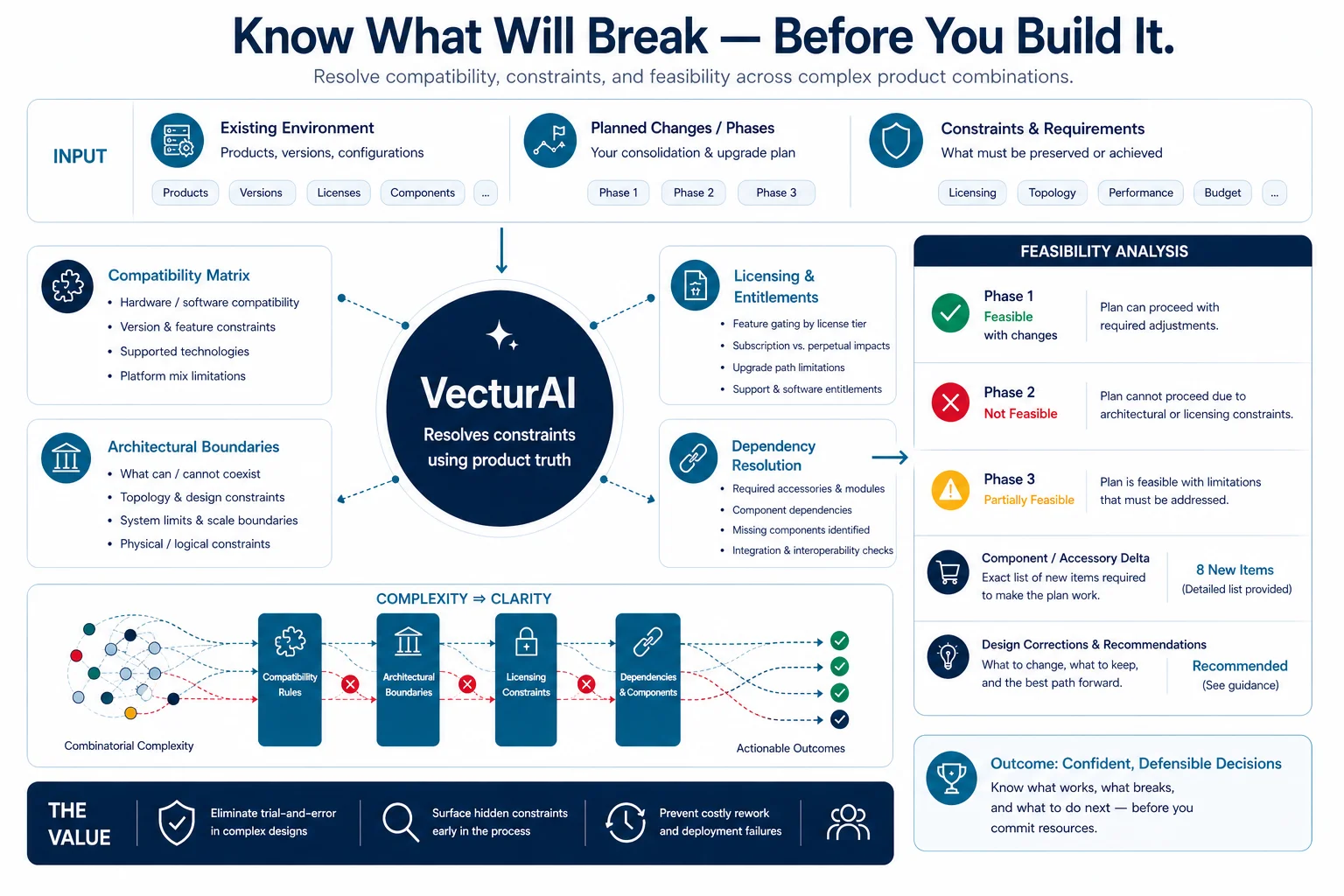
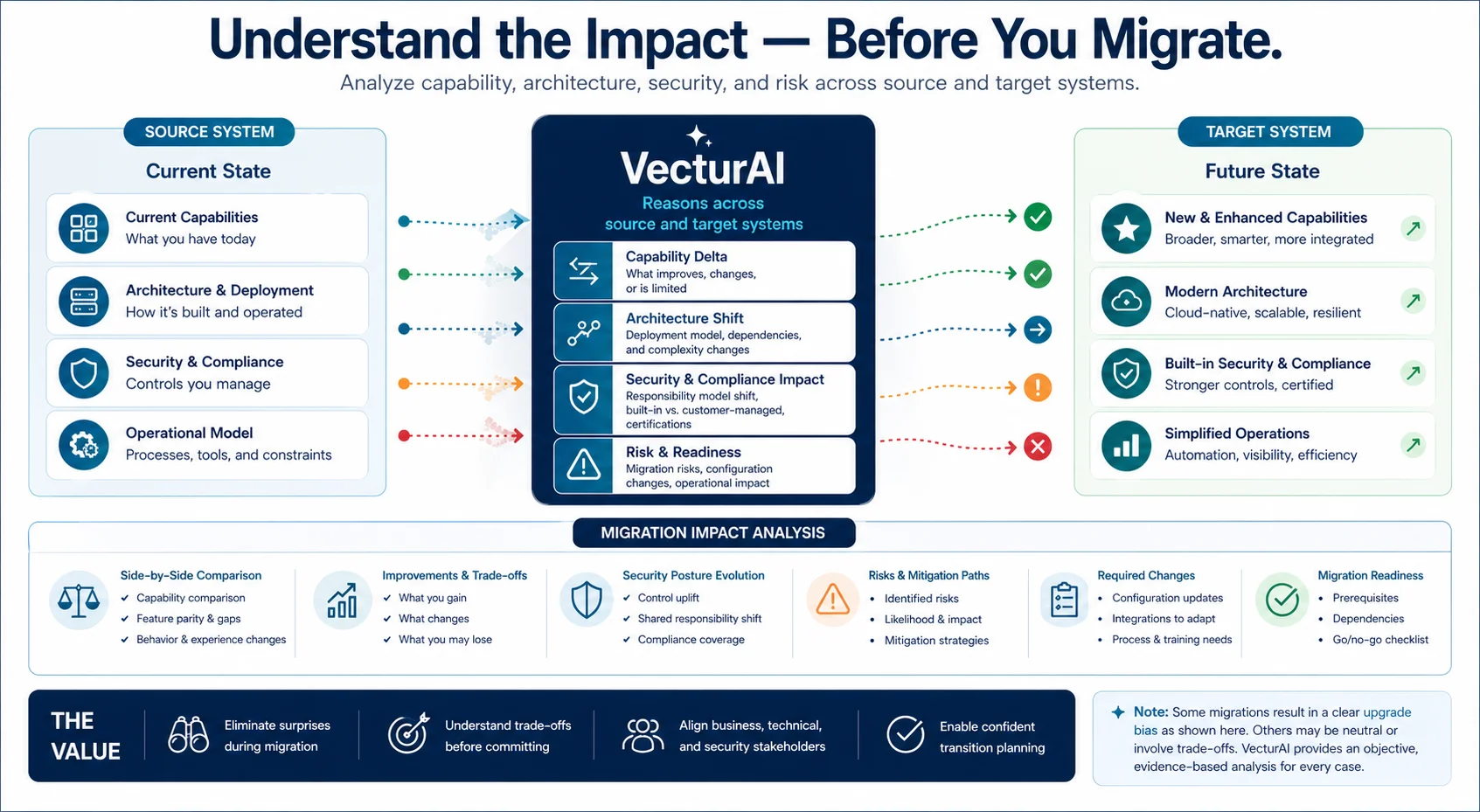
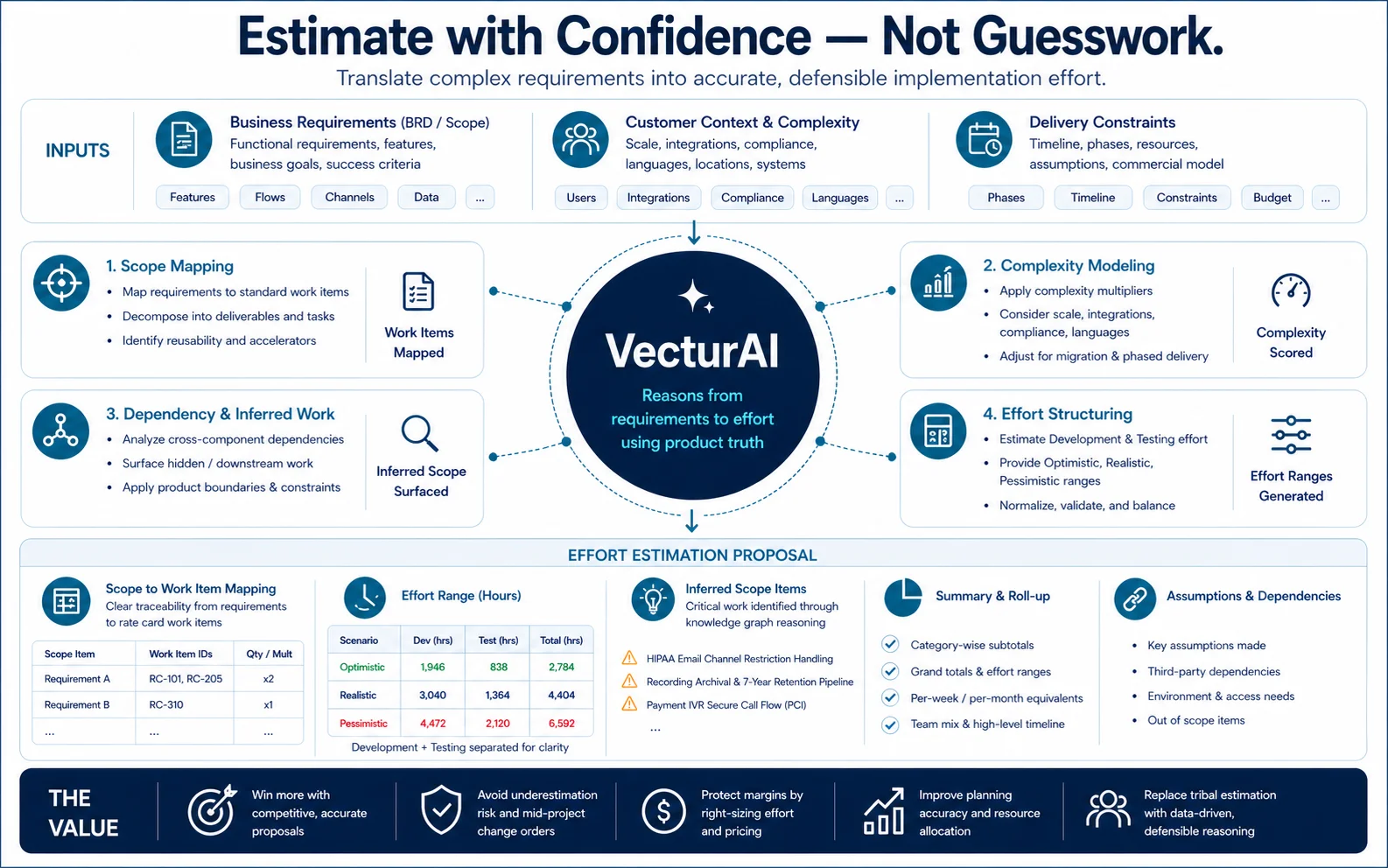
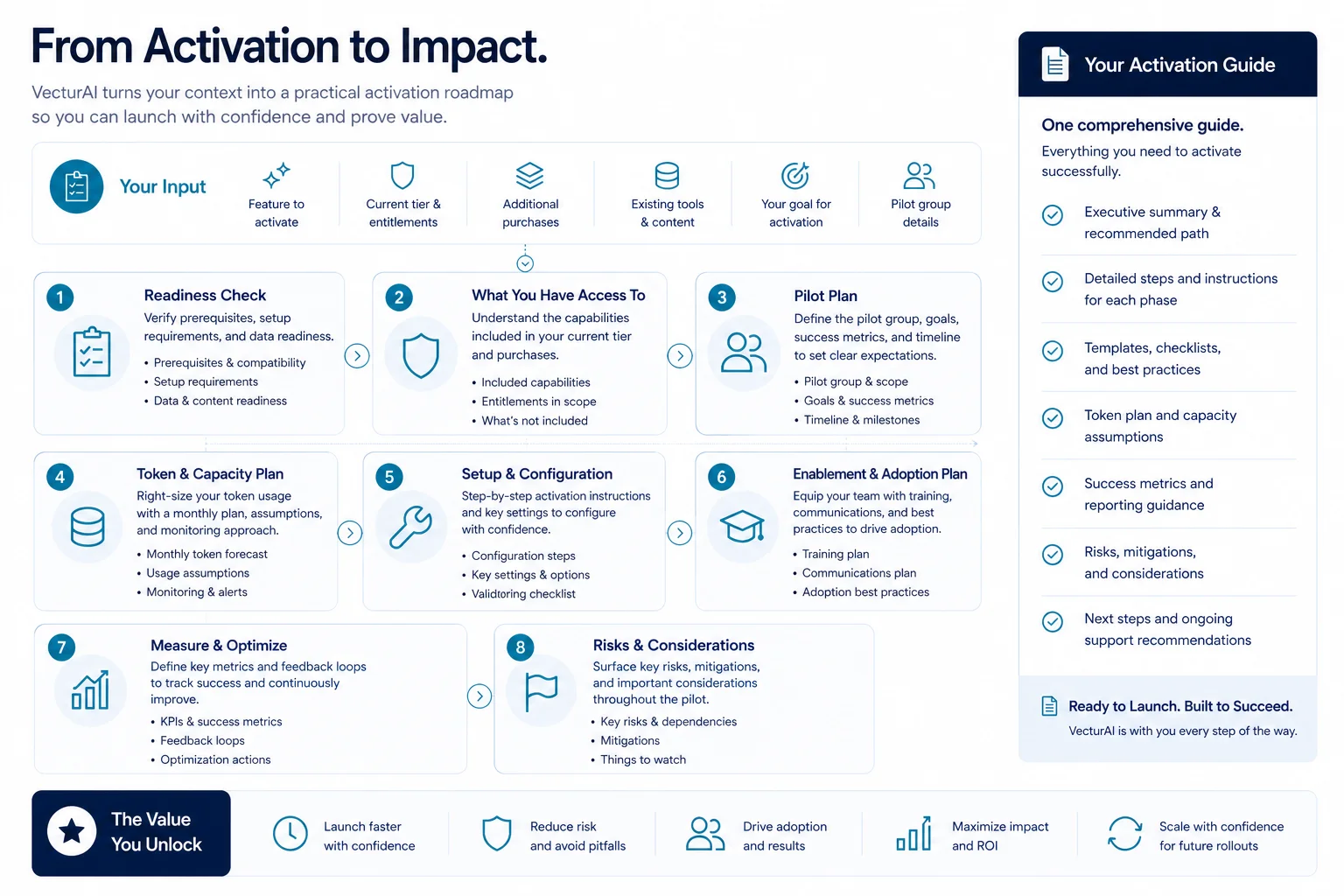
The AI Sales Engineer and AI Solution Architect produce the artifacts your team would: capture plans, fit assessments, RFP responses, compatibility and migration analyses, and estimates. Each is grounded in Product Truth and ready for expert review.
Qualify, position, and plan the technical pursuit grounded in product truth.
Check compatibility across constraints, versions, and dependencies.
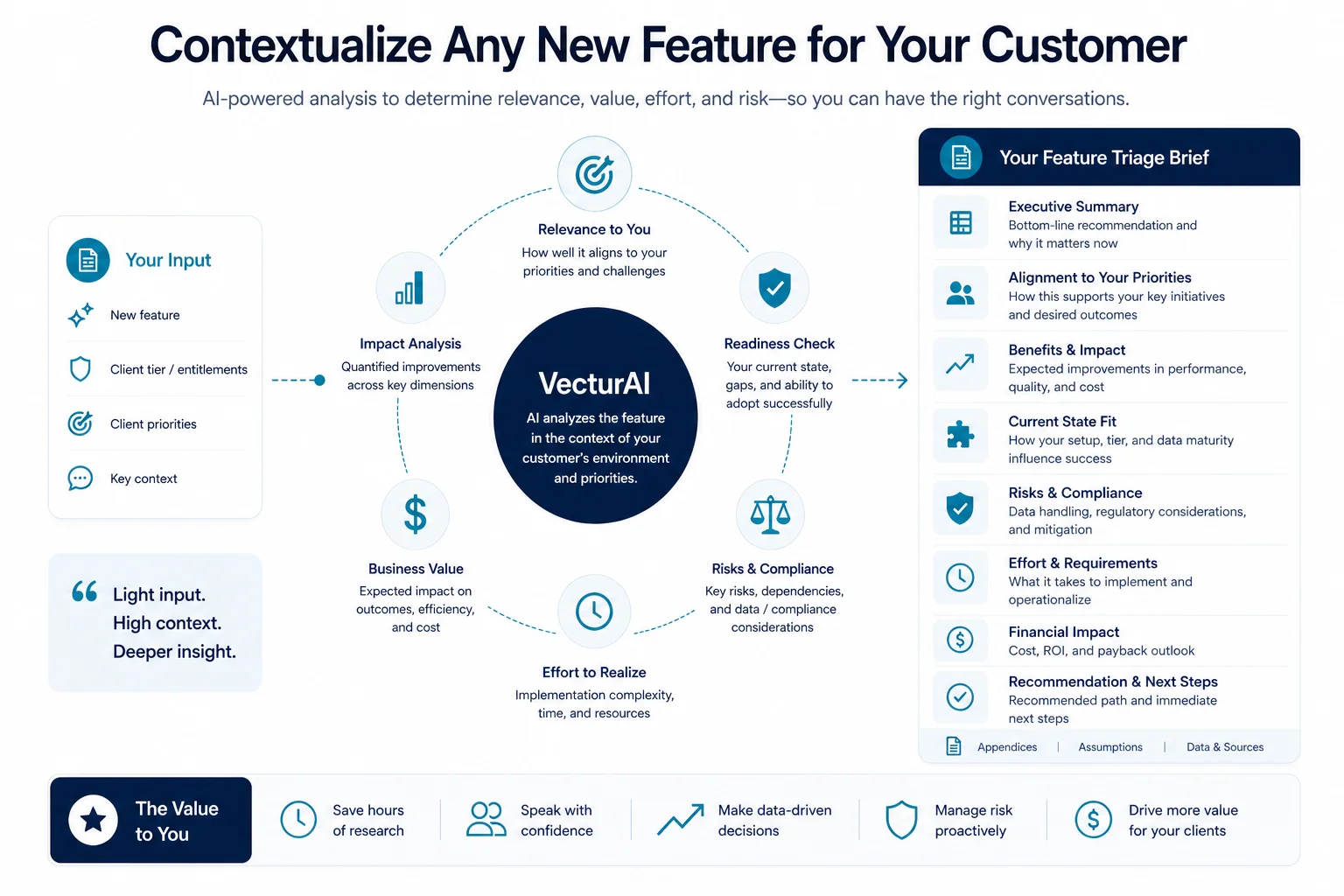
Triage features and capabilities against the customer's real environment.
Your commercial motion runs elsewhere: the account context, opportunities and conversations that live across CRM, meetings and chat. VecturAI draws it in as context (account, opportunity and task history included) and applies it against product truth held natively at its core.
Context from your commercial motion meets product truth from ours. That's how the technical win gets won, and the BOMs, solution documents and technical designs that secure it land right back on the deal record in the tools you already run.
Watch the AI Sales Engineer and AI Solution Architect work through an opportunity on the products you sell.